Quick answer
Wedding guest transport in Sydney starts with a quick sum: guests who need a ride, divided by the passenger seats per vehicle, gives the number of loads; divide that by the loops each vehicle can make before the ceremony. Sydney Maxi Taxi quotes a fixed price for every run before you book and works 24/7, so late returns are covered.
Should you provide transport for wedding guests?
You don't have to, but it pays off when the ceremony and reception are in different places, parking is short, the bar is open late, or the venue is out of town. To size it, count the guests who need a ride, divide by the seats per vehicle, then divide by the loops each vehicle can make.
Picture a guest who drives to a ceremony in Hunters Hill, circles the block for a park, crosses town to a reception in Pyrmont, then spends the speeches wondering if they're fine to drive home. A van from their hotel fixes the parking and the drive home in one go. That's what our wedding and event transport is for: guest shuttles and bridal party cars, timed to your run sheet.
It helps your timeline as well. When guests travel on a schedule you set, you know when the last of them will be seated, and nobody walks in late because the car park was full.
You can usually skip it when everything happens at one venue with plenty of parking and most guests live nearby. Even then, a single late-night run back to the main hotel is worth pricing.
If you do provide transport, put the pick-up times on the invitation or your wedding website. Guests who know a van is coming leave the car at home.
How many vehicles do you need for your guests?
Divide the guests who need a ride by the passenger seats in your chosen vehicle to get the number of loads, then divide the loads by the loops each vehicle can make in the time you have. Round up both times.
- Count the riders. Start with your RSVPs, then take out guests driving themselves and the bridal party, who travel separately. Children count: each one takes a seat.
- Check the seats. Find the passenger figure for the vehicle you want in the table below.
- Work out the loads. Divide riders by seats and round up. Half a load still needs a whole vehicle and a driver.
- Divide by loops. Divide the loads by the loops one vehicle can make before guests need to be seated, and round up again. That's how many vehicles to book.
| Vehicle | Passengers | Luggage | Typical models |
|---|---|---|---|
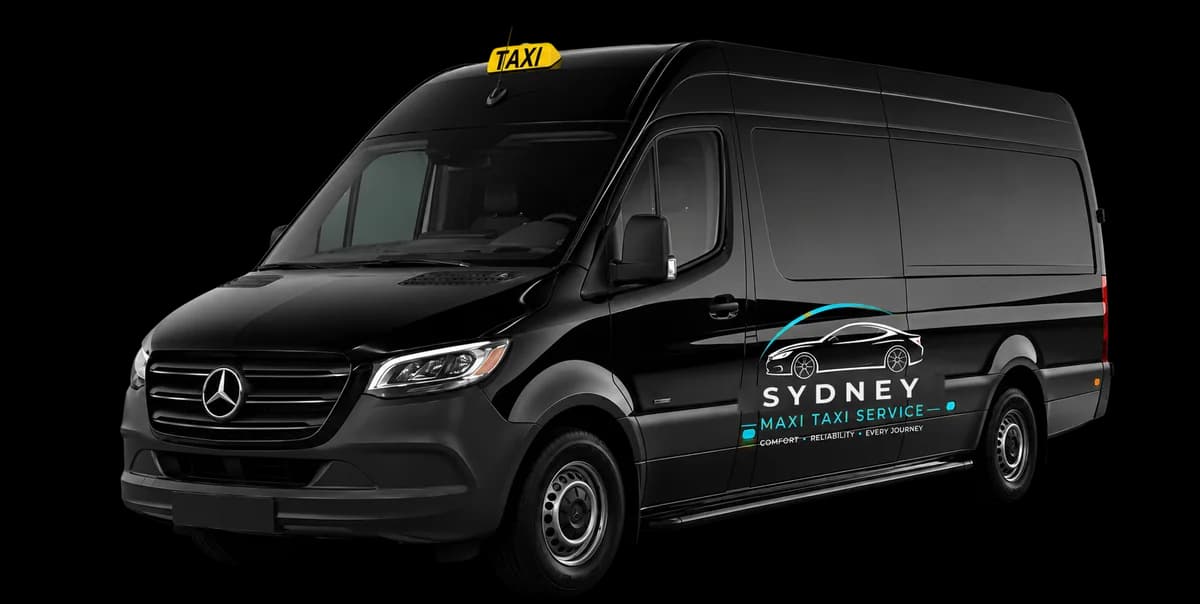
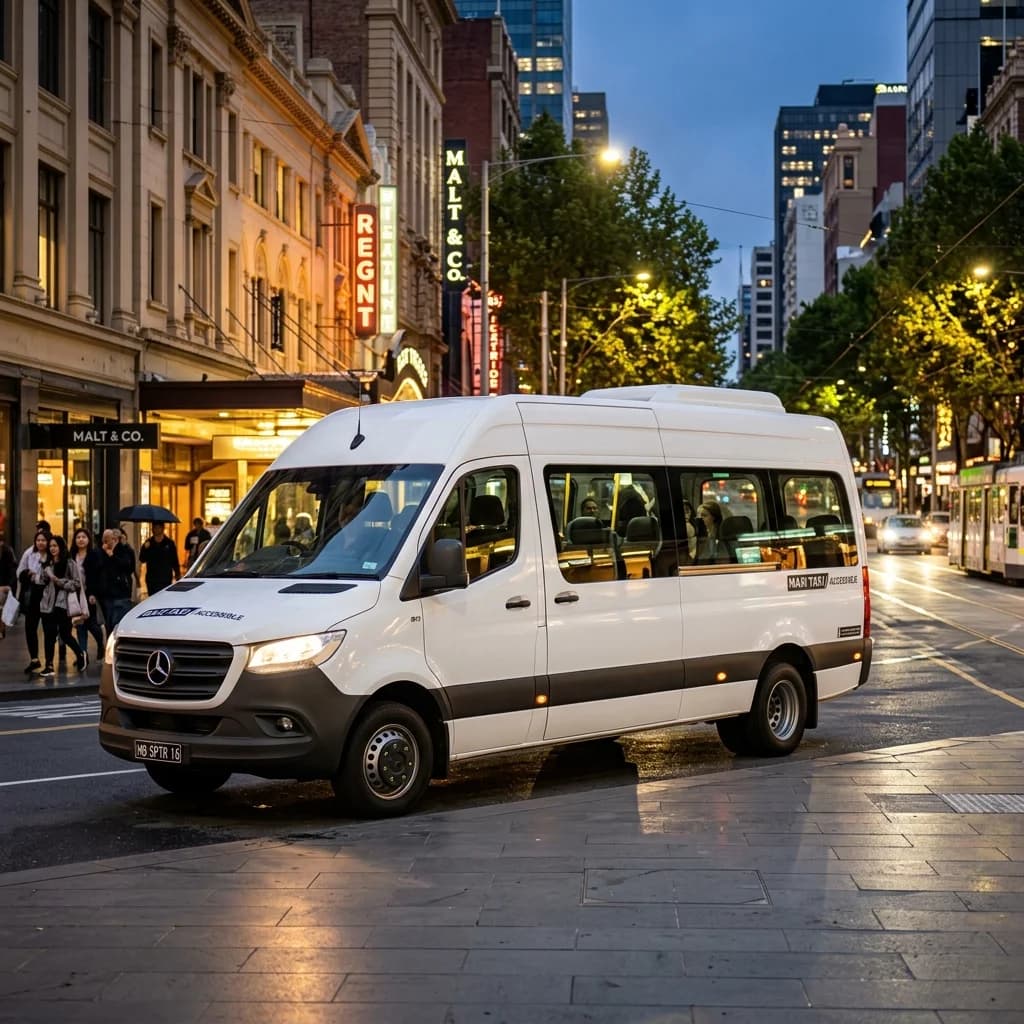
| Maxi Van | Up to 11 passengers | Large luggage space | Toyota HiAce, Mercedes Sprinter or similar |
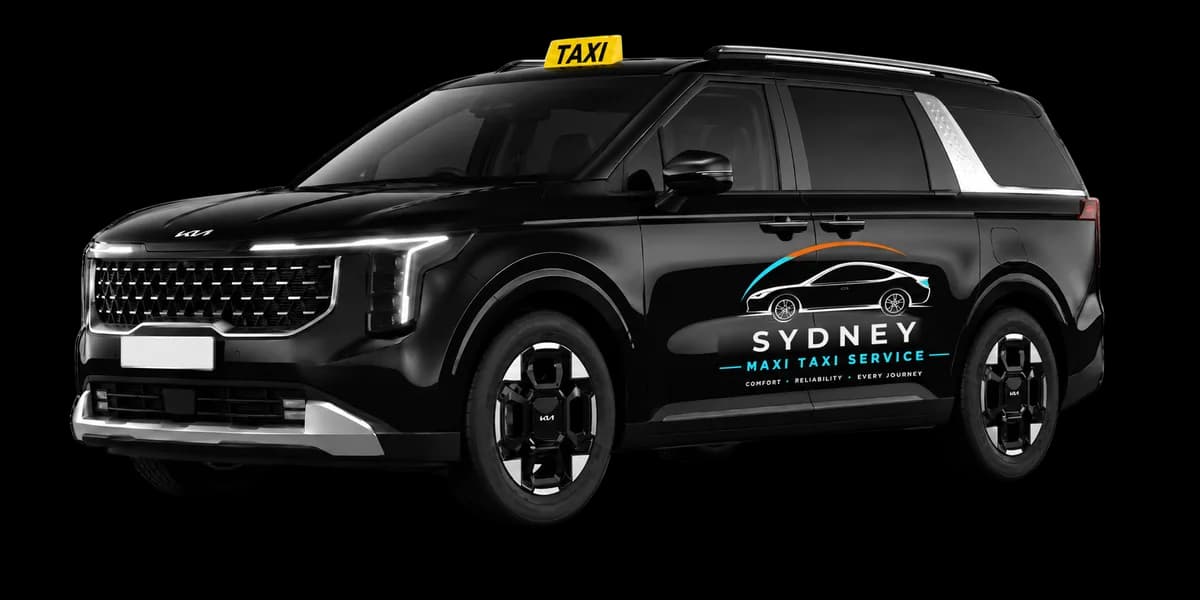
| Maxi 7 Seater | Up to 7 passengers | Ample boot space | Kia Carnival, Hyundai Staria or similar |
| Premium SUV | 1-5 passengers | Standard luggage | Lexus RX, Toyota Kluger or similar |
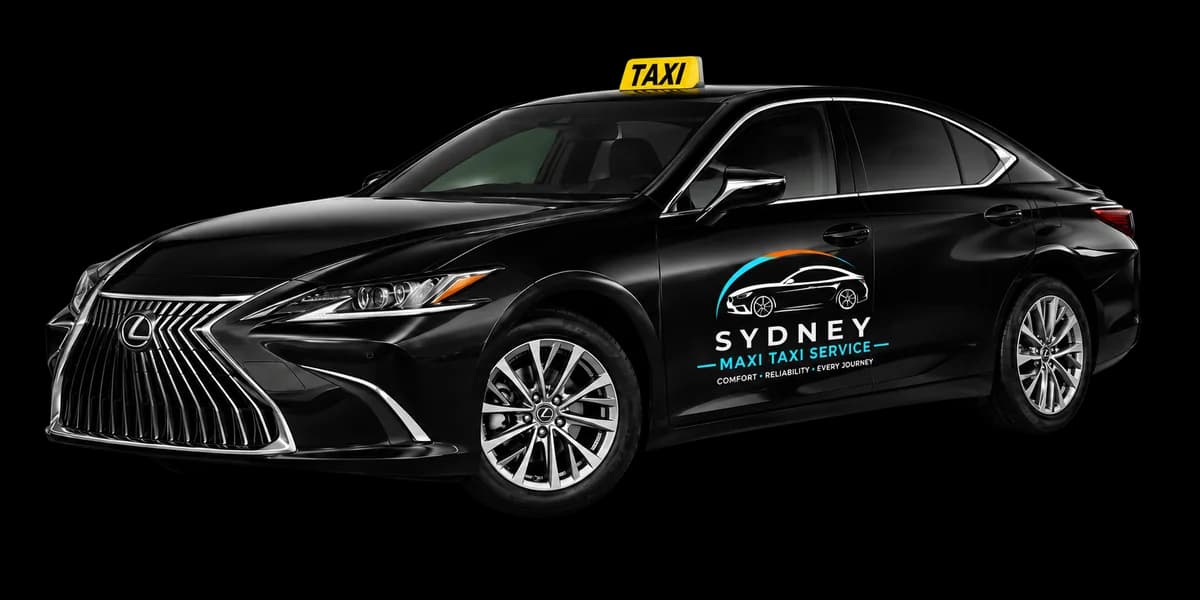
| Executive Sedan | 1-4 passengers | Standard luggage | Lexus ES, Toyota Camry or similar |
| Wheelchair Taxi | Wheelchair + carer | Ramp or lift access | Wheelchair accessible maxi van or similar |
Step four is where the numbers move, as long as your timeline has room. Take a wedding that works out at six loads:
| Loops per vehicle | Vehicles to book | What it means on the day |
|---|---|---|
| 1 (one-way runs) | 6 | Everyone arrives together and nobody waits at the venue |
| 2 | 3 | The first group waits at the venue while the vans go back for a second load |
| 3 | 2 | The first group waits through two more loops, and one late guest can delay the last run |
Big numbers? If most guests leave from one hotel at one time, get a quote from a coach company too, since one coach moves a big group in a single trip. Vans suit several pick-up points and staggered returns.
Odd numbers round up too: five loads over two loops is three vehicles. Leave a couple of spare seats on the last run for late changes. Children? Tell us their ages, tick the baby seat or booster option in the booking form, and we fit the right seat for each child before pick-up.
You don't need one vehicle type for the whole day, either. A seven seater can collect the grandparents from their hotel while our largest maxi van runs the main hotel. The same sums work for any group travel. Every vehicle's details are on our fleet page.
Shuttle loops or one-way runs?
Use one-way runs when everyone has to be in place by a set time, which usually means before the ceremony. Use loops when arrivals can be staggered, like the trip home at the end of the night, because one vehicle doing two trips replaces two vehicles doing one.
A loop has four parts: the drive there, unloading, the drive back and loading the next group. It's easy to forget the drive back. With a hotel 20 minutes from the venue and 5-10 minutes to load or unload at each end, one loop takes 50-60 minutes.
That's why loops before a ceremony are risky. If the first run leaves ten minutes late because two guests are still finishing lunch, the second run arrives after the bride. Send everyone in one wave before the ceremony. After the reception, loops are a better fit, because guests leave in waves anyway.
Multiple pick-up points need the same care. A van that collects from three hotels before a ceremony carries the delays of all three. If the timing is tight, give each hotel its own vehicle, or ask guests to meet in one hotel lobby.
A sample wedding day run sheet
A run sheet lists every transport movement with a time, a pick-up, a drop-off, a vehicle and a buffer. This sample assumes a 30-minute ceremony at 3pm, photos at a second location and a reception at a third venue, with drives of about 25 minutes between each. Swap in your own times.
| Time | Movement | Who and vehicle | Buffer |
|---|---|---|---|
| 2pm | Hotel to ceremony | Guests in maxi vans, one-way runs | Arrive about 2:25pm, 20 minutes before guests need to be seated |
| 2:20pm | Getting ready to ceremony | Bride and parent in the Executive Sedan | Arrives about 2:45pm and waits out of sight until 3pm |
| 3:50pm | Ceremony to photo location | Couple and bridal party in the Premium SUV or Maxi 7 Seater | 20 minutes after the ceremony ends for congratulations |
| 4pm | Ceremony to reception | Guests in maxi vans, one-way runs | Drinks start on arrival, so nobody waits for the couple |
| 5:30pm | Photo location to reception | Couple and bridal party | Arrives about 5:55pm, 20 minutes before a 6:15pm entrance |
| 10pm | Reception to hotel, early run | Families and older guests in one maxi van | MC announces it at 9:45pm |
| 11:30pm | Reception to the couple's hotel | Couple in the Executive Sedan | Booked as its own job, so a guest run can't hold up the send-off |
| 11:50pm | Reception to hotel, last drinks run | Remaining guests in maxi vans | Leaves 20 minutes after the 11:30pm finish, because farewells take time |
Build yours backwards. Fix the time guests must be seated, take off the drive and a buffer, and that's when the first van leaves. Do the same for the reception, then share the final sheet with the venue, the photographer, the MC and us.
Bridal party cars vs guest shuttles
Book them as separate jobs. The bridal party car follows the couple's day, from getting ready to the ceremony, photos and the reception entrance, while guest shuttles follow the guests. Combine them and someone waits: guests at the ceremony while the couple does photos, or the couple while the guests are ferried across town.
For the couple, the Executive Sedan or Premium SUV is a natural fit. Tell us about the dress when you book: a long train or a full skirt changes which vehicle is easiest to get in and out of, and we'll suggest one. A larger bridal party can ride together in the Maxi 7 Seater or our largest maxi van, which keeps everyone on the same clock.
If the car stays with you through photos, put that on the run sheet so the fixed quote covers it. A car that waits is a different booking from one that drops off and leaves. Every vehicle is cleaned before each booking, which counts for more on a wedding day than on most.
When you book online, list the bridal car and the guest runs in the notes so we can quote the whole day together.
What about late finishes and regional venues?
Book the trip home before the day, with set departure times. Nobody wants to hunt for a ride at midnight in a wedding outfit. For a regional venue, decide early whether guests stay nearby or come back to Sydney the same night, since that decides whether loops are even possible.
In the city, two return runs give guests a choice: an early one around 10pm for families and older guests, and a last-drinks run just after the official finish. Ask your MC to announce both. We work 24 hours a day, 7 days a week, including public holidays, so a 12:30am finish is fine.
Some couples skip the return and let guests book their own rides. In the inner city that can work. At a vineyard or a mountain venue at midnight, you can't count on a car being nearby. If you're weighing booked vans against rideshare for the night, see our maxi taxi vs Uber XL comparison.
Distance is the other half. Visit NSW gives these drive times for three regional wedding areas:
| Region | Drive time (Visit NSW) | What it means for guest transport |
|---|---|---|
| Hunter Valley | Just over two hours from Sydney | A Sydney day return means more than four hours on the road, so shuttles from local accommodation work better |
| Blue Mountains (Katoomba) | Around 90 minutes via the M4 | A same-night return to Sydney is possible; book the departure time in advance |
| Southern Highlands (Bowral) | 90 minutes from the CBD, about 75 minutes from Sydney Airport | Interstate guests can travel straight from the airport to their accommodation |
With drive times like these, loops from Sydney are off the table: a van can't make a three-hour round trip and be back for a second load before the ceremony. Plan one-way runs at fixed times, or put guests up nearby and run short loops between their accommodation and the venue. That's where loops work best.
For a regional wedding, send us the venue address early and ask for a fixed quote. Guests flying in for it can book airport transfers straight to where they're staying.
Your wedding transport booking checklist
Send us your run sheet, every address and the number of guests on each run, and we'll come back with a fixed quote. Here's what to include:
- The date and every address: ceremony, photo location, reception and each hotel.
- The number of guests at each pick-up point.
- Your run sheet, with the time each group needs to arrive.
- Children's ages, so we fit a baby seat or booster for each child.
- Any guest who travels in a wheelchair, so we send a wheelchair accessible taxi with ramp or lift access.
- Return times for the early run and the last run.
- The name and mobile number of your transport contact on the day.
- How you'd like to pay: cash, card, digital wallet or Cabcharge.
Book once your venues and ceremony time are confirmed. If your date is a spring or summer Saturday, book early rather than waiting for final RSVPs, and send updated numbers once they close.
Comparing quotes? In NSW, booking services set their own fares and must give you an upfront fare estimate, so check that each quote covers the same runs and the same waiting time before you decide.
Get a fixed quote through our online booking form, or call or WhatsApp 0416 507 515. There's more on vehicles and timing for couples on our weddings and events page.
Questions people ask
You don't have to, but it helps when the ceremony and reception are at different venues, parking is limited, guests will be drinking, or the venue is outside the city. If you do, put the pick-up times on the invitation or wedding website so guests leave their cars at home. Even for a city wedding, one late-night run back to the main hotel is worth considering.
It depends on the number of vehicles, how many runs each makes, the distances, any waiting time and how late the night finishes. In NSW, booked taxi and hire vehicle fares are set by each provider, and booking services must give you an upfront fare estimate, so compare quotes like for like. Sydney Maxi Taxi gives a fixed quote for the whole run sheet before you book.
Count the guests who need a ride, divide by the passenger seats in the vehicle you've chosen and round up: that's your number of loads. Then divide the loads by the loops each vehicle can make before the ceremony and round up again. One-way runs are safer before a ceremony, so plan on one vehicle per load unless your timeline allows a second loop.
Book as soon as your venues and ceremony time are confirmed, and earlier if your date is a spring or summer Saturday. You don't need final guest numbers to start: send an estimate, then update the numbers when RSVPs close. Confirm the final run sheet with your transport company in the last week or two before the wedding.