
Quick answer
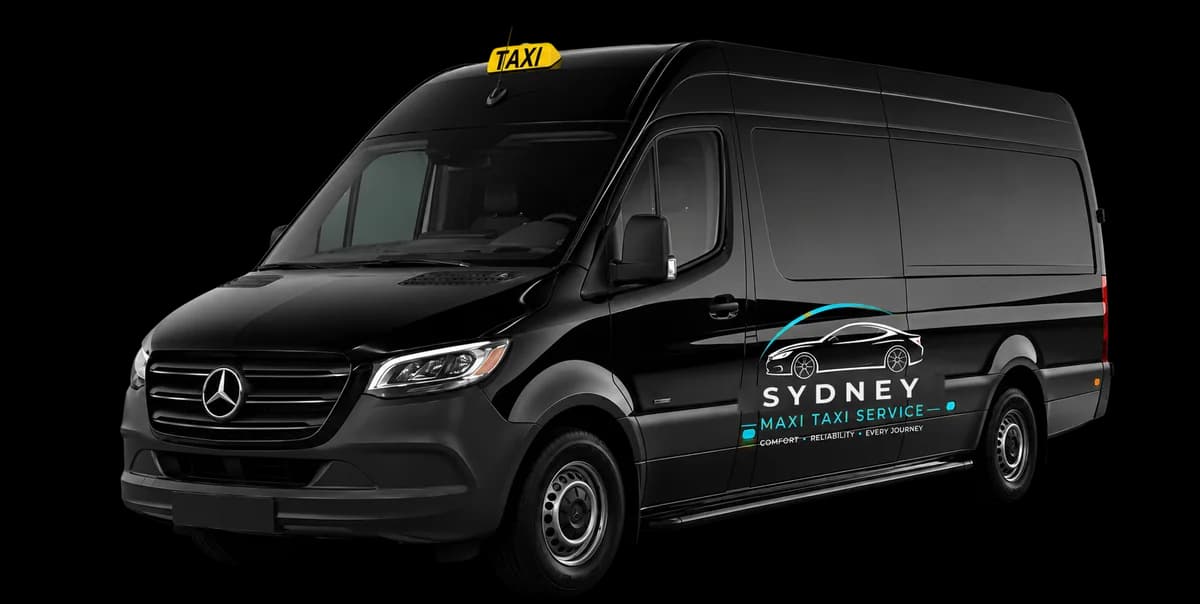
A corporate taxi account in Sydney lets staff and guests ride without paying on the day. Cabcharge accounts are open to registered organisations with a valid ABN and work in taxis that accept Cabcharge. Sydney Maxi Taxi accepts Cabcharge and invoices business accounts, with a fixed price confirmed before every booking, 24 hours a day, 7 days a week.
How does a corporate taxi account work in Sydney?
A corporate taxi account lets staff and guests ride without paying on the day, because the fare is charged to the business instead of a personal card. In Sydney there are two common setups: a Cabcharge account, which works in any taxi that accepts Cabcharge, or a business account with one taxi company that invoices you directly.
Sydney Maxi Taxi does both. We accept Cabcharge, and we invoice business accounts for corporate travel, from corporate transfers across the CBD, North Sydney and Parramatta to airport runs. Every trip gets a fixed quote before you book, so the price on the invoice is the price you agreed, unless the trip itself changes on the day.
Which setup suits you comes down to how your people travel. A Cabcharge account follows staff into taxis from many networks, so it suits someone who hails a cab outside the office at 6 pm. An invoiced account covers only the company that holds it, but every trip on it was booked and priced in advance, and that makes month-end reconciliation a lot quieter.
You can also run both side by side. Booking with us needs no app, and a one-off ride needs no account at all.
Cabcharge, invoice or company card: which should you use?
Choose Cabcharge when your people ride with lots of different taxi companies, and an invoiced account when most trips go through one company. A company card is fine for the odd trip, as long as the cardholder is the one in the car.
| Cabcharge | Invoice to a business account | Company card | |
|---|---|---|---|
| Who sets it up | Your organisation applies to Cabcharge (it needs a valid ABN; sole traders and personal accounts can't apply) | You arrange it with the taxi company, for example by asking us to open a business account | No setup: the cardholder pays on the day |
| How the passenger pays | With a FASTCARD, a Digital FASTCARD or Digital Pass on their phone, or a paper eTICKET | They don't pay in the car; the trip goes on the account | Card or digital wallet (we take all major cards) |
| Spending controls | Fare limit per trip, days and times of use, expiry dates, and weekly, monthly or yearly limits on a Digital FASTCARD | You approve a fixed quote before each trip is booked | Whatever limits your card provider sets |
| Records | FASTCARD and Digital Pass trips are recorded in the Cabcharge Plus portal | An invoice from the taxi company | Your card statement, plus a receipt or tax invoice if you ask for one |
| Works with | Taxis that accept Cabcharge (most major networks, so check first) | Only the company that holds the account | Any operator that takes cards |
| Best for | Staff who ride often, and guests who need a single ride | Regular bookings, team transfers and airport runs | One-off trips with the cardholder on board |
If your team books us regularly, a business account means nobody claims a taxi fare on expenses, and finance sees one supplier with fixed prices instead of a pile of receipts.
How does Cabcharge work?
Cabcharge is a taxi payment account that only organisations can hold. A registered business, company or organisation with a valid ABN applies and nominates an authorised person to manage users, spending controls and reporting. Sole traders, self-managed funds, trust funds and personal accounts aren't eligible.
Once the account is open, the organisation is accountable for every trip and transaction on it, and travellers pay with one of four Cabcharge products instead of their own money:
- FASTCARD: a reusable chip card for staff who travel regularly.
- Digital FASTCARD: the phone version, issued instantly, with optional weekly, monthly or yearly spend limits.
- Digital Pass: a pass sent straight to a phone, with a fare limit and an expiry you set. It's built for one-off trips.
- eTICKET: a cardboard ticket for one trip only, ordered in batches of at least 50. It has to stay undamaged to remain valid.
Whatever the product, check the taxi takes Cabcharge before the trip starts. Cabcharge says most major taxi networks across Australia accept it and lists them on its website, and it tells travellers to confirm with the taxi company when they book. At a rank or on the street, look for the "We proudly accept Cabcharge" sticker, usually above the rear door handles, or ask the driver before you get in.
We accept Cabcharge. Mention it when you book, so your driver is ready for it.
How do you book a taxi for someone else?
Book it as the organiser, but put the passenger's name and mobile number on the job, because that's who the driver looks for and calls. Add the exact pickup point, the time, and for an airport pickup the flight number.
The mobile number is where these bookings go wrong. If the job carries your desk number, the driver waiting outside a George Street tower ends up calling you, while your guest stands in the foyer wondering which car is theirs.
- The passenger's full name and mobile number, plus yours as the organiser
- The pickup address with the building name and the entrance to use, such as a side street or a hotel driveway
- The date and pickup time, or the flight number and terminal for an airport pickup
- How many passengers and bags, so we send the right vehicle
- How the trip will be paid: Cabcharge, your business account or a card
- Who should get the booking confirmation
You can send all of this through the online booking form, with the passenger's details in the notes, or by phone or WhatsApp on 0416 507 515. We confirm every booking by phone, email or WhatsApp. Forward the confirmation to the passenger so they know the time and where to meet the driver.
One maxi van or several cars for a team?
One maxi van is usually the simpler choice when the team travels together and starts and finishes in the same place. Several cars make more sense when people split up afterwards or leave at different times.
| Vehicle | Passengers | Luggage | Typical models |
|---|---|---|---|
| Maxi Van | Up to 11 passengers | Large luggage space | Toyota HiAce, Mercedes Sprinter or similar |
| Maxi 7 Seater | Up to 7 passengers | Ample boot space | Kia Carnival, Hyundai Staria or similar |
| Premium SUV | 1-5 passengers | Standard luggage | Lexus RX, Toyota Kluger or similar |
| Executive Sedan | 1-4 passengers | Standard luggage | Lexus ES, Toyota Camry or similar |
A single van keeps everyone together. The whole team walks into the client's office at once, and nobody spends the first ten minutes of the meeting waiting for the second car to find a park.
Several cars win when the day splits. Say the team visits a client in Parramatta, then two people fly out of T2 and the rest head back to the CBD: two vehicles from the start save half the group a long detour.
Luggage changes the answer. A van can look like overkill for a handful of people, until you count the bags. A team flying out with suitcases and a display stand may need the luggage space of our largest maxi van even if the head count would fit a smaller vehicle, so tell us about the bags as well as the people.
For one or two executives, an Executive Sedan or Premium SUV does the job. You can also mix them: a maxi van for the team, and a sedan for the director who has to leave the offsite early.
How do you book roadshows, events and multi-stop days?
Send the whole day in one go: every address, every meeting time and roughly how long each meeting runs. Our fixed quote covers the trip details you give us, so a complete run sheet gets you a price you can put in the budget.
Here's what a useful run sheet looks like for a visiting executive's day:
- 8:00 am: pickup at the hotel in the CBD
- 9:00 am: meeting in North Sydney, about an hour
- 11:30 am: meeting in Parramatta, about 90 minutes
- 3:00 pm: meeting at Barangaroo
- 5:30 pm: drop-off at T1 International for an evening flight
Leave slack between legs, especially any that cross the harbour or head out to Parramatta in the morning peak. Traffic is the one part of the day nobody can schedule.
Changes on the day happen: a meeting runs long, someone adds a stop. Extra stops or extra waiting can change the fare, and we tell you about any change before the trip or as soon as practicable. If there's a long gap between meetings, ask us whether the driver should wait or come back for the next leg, and we confirm the plan and the price before the day.
Events flip the problem around: lots of people, one destination and a finish time nobody can promise. For a conference or the end-of-year party, give us the venue, the date, the expected numbers and the likely finish time, and book the trips home when you book the trips in. Late November and December are work-party season, so lock in transport when you lock in the venue. Our group travel and event transport pages cover the bigger jobs.
How do you arrange an airport pickup for a visiting client?
Book an airport transfer with the client's flight number, terminal and mobile number. We track the flight and the driver adjusts if it lands early or late, so a delay doesn't mean rebooking from your desk.
International flights arrive at T1; domestic flights use T2 or T3, depending on the airline. An international visitor still has passport control and bags to get through before they reach the kerb, so don't book their first meeting for the minute the plane lands.
Sydney Airport lets taxi drivers leave their vehicles only at designated pre-booked taxi bays at the international and domestic terminals. Stopped anywhere else outside the terminals, aviation security rules keep the driver with the vehicle. We confirm the exact meeting point when we confirm the booking, so send it to your guest along with our number.
On price, a booked transfer is charged at the fare agreed when you book. Sydney Airport's fixed-fare taxi trial to the CBD applies to taxis from the airport ranks, not to pre-booked transfers, and our Sydney Airport maxi taxi fares guide explains the difference.
For the trip back, you have two tidy options. Book the return with us at the same time as the pickup and put both on the business account. Or, if your organisation has Cabcharge, send the client a Digital Pass with a fare limit and an expiry, so they can take a taxi whenever their last meeting ends.
How do you set up invoicing with Sydney Maxi Taxi?
Call or email us and ask for a business account. Tell us who will be booking and where invoices should go, and we confirm how invoicing works for your account before the first trip.
- Your business name and billing address
- The email address invoices should go to (an accounts inbox works well)
- The names of the people allowed to book on the account
- Anything finance needs to see on each invoice, such as the passenger's name or a cost centre (ask, and we confirm what we can include)
Ask the practical questions up front as well: how often invoices are issued, whether each trip is listed, what the payment terms are and how changes on the day show up. Finding out before the first trip beats querying it at month end.
To get started, call or WhatsApp 0416 507 515, text 0406 929 730 or email bookingsydneytaxi@gmail.com. You can also use the contact form and choose Corporate travel as the service. Our corporate travel service page has more on the rides themselves.
Questions people ask
Cabcharge is a taxi payment account for organisations. A registered business with a valid ABN opens the account and nominates an authorised person to manage users, spending controls and reporting. Travellers then pay fares with a FASTCARD, a Digital FASTCARD, a Digital Pass on their phone or a paper eTICKET instead of their own money, and the organisation is accountable for every trip on the account.
Yes, in taxis that accept it. Cabcharge says most major taxi networks across Australia take it, but it tells travellers to check with the taxi company when booking, or to look for the "We proudly accept Cabcharge" sticker above the rear door handles before getting in. Sydney Maxi Taxi accepts Cabcharge, so mention it when you book and the driver will be ready.
No, only with taxis that accept it. Cabcharge says most major taxi networks across Australia do, and it lists them on its website, but it still advises checking with the taxi company when you book. At a rank, look for the "We proudly accept Cabcharge" sticker, usually above the rear door handles, or ask the driver before you get in. Your employer can also limit a card by fare, day or time.
Yes. Ask for one when you book or before you pay. The ATO says a GST-registered business must give you a tax invoice within 28 days of a request, unless the sale is $82.50 or less including GST. Sydney Maxi Taxi invoices business accounts, so regular corporate trips arrive on an invoice. For a one-off trip, say you need a tax invoice when you book.
No. You can book a one-off corporate transfer with Sydney Maxi Taxi online, by phone or on WhatsApp without an account, and pay by card, digital wallet, Cabcharge or cash. A business account is worth setting up once you book regularly and want trips invoiced to the company instead of paid on the day. Every trip is quoted at a fixed price before you book.