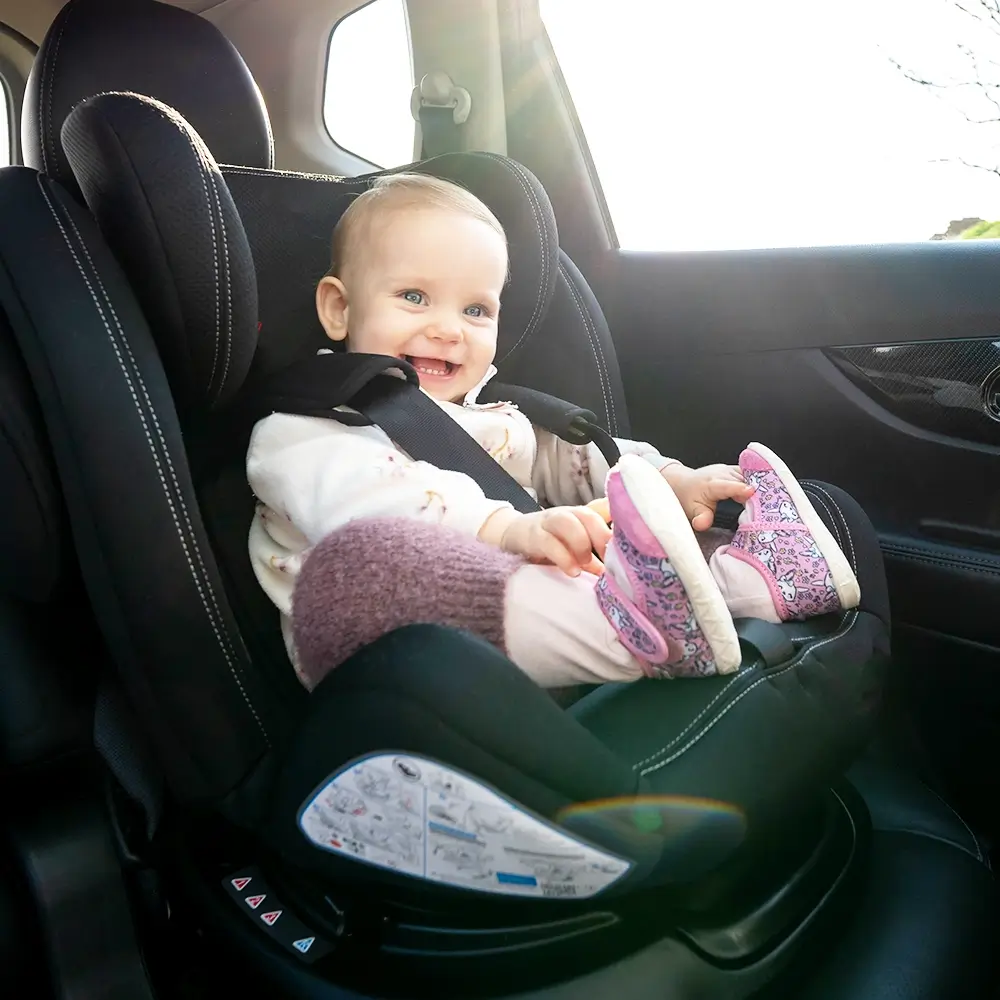
Quick answer
In NSW taxis, babies under 12 months must ride in an approved child restraint, but older children may use a booster or a properly fastened seatbelt. Hire cars and rideshare follow private car rules: every child under 7 needs an approved restraint. Sydney Maxi Taxi fits a baby seat or booster when you select it in the booking form.
Do NSW taxis need car seats?
Only for babies under 12 months. In a NSW taxi, a baby up to 6 months must ride in an approved rear-facing child car seat, and from 6 to 12 months in a rear-facing seat or a forward-facing seat with an inbuilt harness. From the first birthday, a booster or a properly fastened seatbelt in their own seat is legal.
So the short version on a child seat in a taxi in NSW: compulsory for babies, strongly recommended up to age 7, and not something a standard taxi has to carry. Every taxi must have a child restraint anchorage point, though, so a seat can be fitted properly when you have one.
Sydney Maxi Taxi takes the question off the table. Select a baby seat or booster in the booking form and we fit it before pickup, so you never have to rely on the taxi exemption. It matters most on Sydney Airport transfers, when you land with a tired baby and a week of luggage and the last thing you want is a debate at the kerb.
That exemption covers taxis only. Hire cars and rideshare vehicles follow the same rules as your own car, so every child under 7 needs an approved restraint that suits their age and size, and the driver can turn you away without one.
What are the child seat rules by age in NSW?
It depends on the child's age and on the vehicle. Taxis get their own column below, while every other vehicle, including hire cars and rideshare, shares the second one.
| Child's age | In a NSW taxi | In a hire car, rideshare or private car |
|---|---|---|
| Up to 6 months | Approved rear-facing child car seat | Approved rear-facing child car seat |
| 6 to 12 months | Rear-facing seat, or forward-facing seat with an inbuilt harness (rear-facing strongly recommended) | Rear-facing seat, or forward-facing seat with an inbuilt harness |
| 1 to 4 years | Booster, harnessed child seat, or a properly fastened and adjusted seatbelt in their own seat | Rear-facing seat, or forward-facing seat with an inbuilt harness (rear-facing recommended until outgrown, at around 30 months) |
| 4 to 7 years | Booster, harnessed child seat, or a properly fastened and adjusted seatbelt in their own seat | Forward-facing seat with an inbuilt harness, or an approved booster seat |
| 7 years and over | Properly fastened and adjusted seatbelt | Seatbelt, with a booster or harnessed seat recommended until the child is 145 cm tall |
"Approved" means the seat meets Australian/New Zealand Standard AS/NZS 1754. If you're flying in with a seat bought overseas, check the label before you pack it, because a seat that only meets another country's standard isn't approved here.
Four details in that table catch parents out:
- The first birthday is the line in a taxi. A 10-month-old needs a proper restraint in every vehicle. If neither the driver nor the adult passenger has one, the taxi driver must not start the trip.
- Legal isn't the same as recommended. For children aged 1 to 7, the Point to Point Transport Commissioner strongly recommends a booster or a child seat, even in a taxi where a seatbelt is allowed.
- Seven isn't the finish line. The suggested minimum height for an adult seatbelt is 145 cm, so keep the booster until your child reaches it, even after their seventh birthday.
- No laps and no sharing. A baby can't ride on an adult's lap, and two children can't share one seatbelt, in any vehicle.
What are the rules in hire cars and rideshare?
The same as in your own car. NSW applies private vehicle rules to hire cars and rideshare vehicles such as Uber or DiDi, so every child under 7 must be in an approved restraint that suits their age and size. There is no seatbelt fallback for a toddler.
The difference shows when nobody has a seat. A hire or rideshare driver may legally refuse to start the trip, or ask you to get out, if a passenger under 7 has no suitable approved restraint. A taxi driver in the same spot must refuse a baby under 1, but can't refuse a child over 1 who will wear a seatbelt in the back.
None of these vehicles has to carry a seat for you. Standard taxis, hire cars and rideshare cars aren't required to carry a child restraint; in NSW only wheelchair accessible taxis and vehicles must. Uber's Sydney Airport page says its driver-partners aren't guaranteed to have car seats, although riders may bring their own.
So someone has to arrange the seat before the trip. The Commissioner's advice is to make a booking that includes the child restraint ahead of time, which is what the seat option in our booking form does. When the seat is already fitted, nobody needs to work out which rule applies to which vehicle.
Can children sit in the front seat of a taxi?
Not if they're under 4. Children under 4 can't sit in the front of a taxi, hire car or rideshare vehicle, and children aged 4 to 7 can only sit in the front of a vehicle with two or more rows when every back seat is unavailable.
A back seat counts as unavailable when another child under 7 is in it, or when the child seats already in the back row take up so much room that another restraint can't be fitted safely. The taxi exemption doesn't change any of this. It relaxes the type of restraint a child needs, and the front seat rules still apply.
If a child aged 4 to 7 does end up in the front, the minimum is a properly fastened seatbelt in a taxi (a booster is strongly recommended) and an approved booster in a hire or rideshare vehicle. There's a catch with seats up front: front seats aren't supplied with child seat anchorage points, so a seat or booster with a top tether strap can't go there unless an anchorage has been retrofitted.
In a maxi van this rarely comes up. With several rows behind the driver, there's usually a back seat for every child, which is a good reason to book a bigger vehicle when you're travelling with more than one young child.
Should you bring your own seat or book one?
Book one if you can, and bring your own if your child is used to theirs or needs a particular seat. Both are allowed: NSW lets parents use their own approved restraint in taxis, hire cars and rideshare vehicles.
If you bring your own
Check that it's approved (look for AS/NZS 1754 on the label) and that your child still fits it. Booster seats must be used with a lap-sash seatbelt, never a lap belt on its own, and a booster heavier than 2 kg must be anchored to an anchorage point. A child under 7 with a medical condition or disability can use an alternative restraint designed for them, as long as you carry a doctor's certificate.
Fitting matters as much as the seat. The driver can be fined and given demerit points if a passenger under 16 isn't restrained according to the road rules, so the driver must make sure the seat is properly attached to the anchorage points. Check it yourself before the car moves. Two minutes at the kerb beats a loose seat on the M5.
If you book one with us
Choose Baby seat or Booster under "Baby or booster seat" in the booking form and the seat is fitted before pickup. The form takes one choice, so use the notes box, or WhatsApp 0416 507 515, to tell us:
- each child's age, plus their rough height and weight if they're close to moving up a seat
- how many seats you need in total, and which type for each child
- if you're also bringing a seat of your own
- your flight number, if it's an airport pickup
We confirm the seats when we confirm the booking, so you know before you leave home what will be fitted.
How do several children fit in one maxi van?
Each child under 7 needs their own suitable seat, ideally in a back row, and a maxi van gives you more back rows to put them in. Tell us every child's age when you book so the right mix of baby seats and boosters goes in.
Picture a family landing at T1 International: two adults, a baby, a three-year-old, a six-year-old and a nine-year-old. Under the rules for hire cars, rideshare and private cars, that's a rear-facing seat for the baby and a harnessed seat for the three-year-old (rear-facing or forward-facing). The six-year-old needs a harnessed seat or a booster, and the nine-year-old should stay in a booster until they reach 145 cm.
That's four child seats, all needing back-row positions, before anyone has loaded a suitcase. Seats take up room, rear-facing ones especially, so count the children in the passenger number on the booking form and check the fleet page for what each vehicle carries.
Family reunions and two families sharing a ride are group travel bookings, and the same rule holds however big the group gets: every child is a passenger with their own seat, never a lap.
Flying into Sydney with a baby: airport pickups
Pre-book, and ask for the seat when you do. A standard rank taxi doesn't have to carry a baby seat, and a baby under 12 months can't legally ride in a taxi without one, so arriving at the rank with a baby and no seat can mean a wait.
If you do end up at the rank, ask for help. Sydney Airport says kerbside supervisors can organise taxis with baby capsules, and the Point to Point Transport Commissioner suggests asking the taxi rank marshal.
A booked airport transfer sorts the seat out before you land. Put your flight number in the booking and select the seat, and we track the flight so the driver adjusts if you land early or late. We confirm the exact meeting point when we confirm your booking.
A seat that's already fitted also saves time at a busy kerb. Sydney Airport says taxi drivers may not leave their vehicles when stopped outside the terminal buildings, apart from at designated pre-booked taxi bays, so the less there is to do at the car, the better.
If your flight number or arrival time changes, send the update on WhatsApp to 0416 507 515 so the driver tracks the right flight. And if you're weighing up the cost of the airport run, see our guide to Sydney Airport maxi taxi fares.
Questions people ask
In NSW, yes, for babies under 12 months. A baby up to 6 months must ride in an approved rear-facing seat, and from 6 to 12 months in a rear-facing seat or a forward-facing seat with an inbuilt harness. Standard taxis don't have to carry one, so ask for a seat when you book or bring your own. Every NSW taxi must have a child restraint anchorage point.
In NSW, a child over 12 months can legally ride in the back of a taxi in a properly fastened and adjusted seatbelt, although a booster or child seat is strongly recommended up to age 7. Babies under 12 months can't travel in a taxi without an approved restraint. The exemption covers taxis only, not hire cars or rideshare, and other states set their own rules.
Not automatically. In NSW a standard taxi, maxi or not, doesn't have to carry a child restraint; only wheelchair accessible taxis and vehicles must. Ask for one when you book. Sydney Maxi Taxi fits a baby seat or booster before pickup when you select the option in the booking form, and you can add each child's age in the notes.
Not as a standard feature. Uber's Sydney Airport page says driver-partners aren't guaranteed to have car seats, though riders may bring their own. In NSW, rideshare follows private car rules, so every child under 7 needs an approved restraint suited to their age and size, and the driver can refuse the trip if there isn't one.
The driver is responsible for it. In NSW the driver can be fined if a passenger under 16 isn't properly restrained, so the taxi, hire or rideshare driver must make sure the child seat is attached to the vehicle's anchorage points. Parents should still check the fitting before the trip starts, whether the seat is their own or supplied.